
 Fernando Raymond
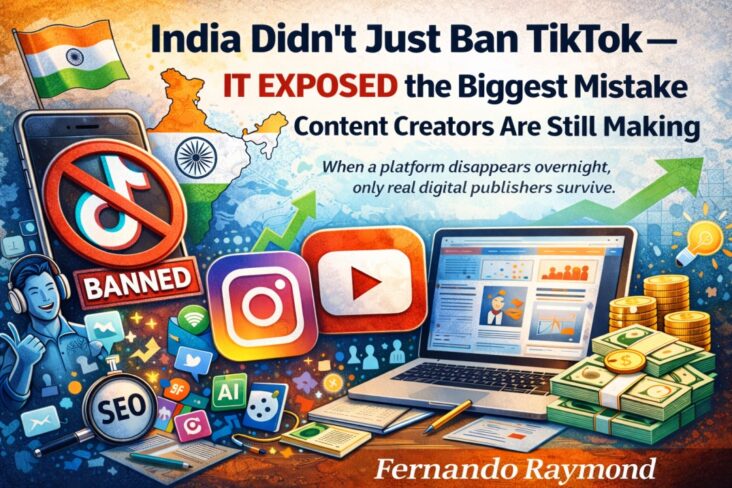
When a platform disappears overnight, only real digital publishers survive. Here’s why Instagram and YouTube exploded and what every creator building a global brand must learn from it.
Most creators think success online comes from chasing trends.
I’ve never believed that.
Real success comes from understanding how attention flows across the internet and building systems that survive when platforms change.

When India banned TikTok, millions of creators lost their main distribution channel overnight. Some influencers vanished from the digital space completely. Others scrambled to rebuild audiences from zero.
But something interesting happened behind the scenes.
Instagram grew massively.
YouTube scaled even faster.
And bloggers, the ones who owned websites, built publishing systems, and understood SEO, quietly gained an advantage most people didn’t notice.
Because the internet didn’t lose attention.
It redirected it.
And that shift revealed a powerful lesson for anyone building a personal brand, running a digital agency, or launching a content business in 2026.
Attention Never Disappears — It Moves
India was one of TikTok’s biggest markets in the world, with hundreds of millions of users consuming short-form video daily.
When the ban happened, many people assumed the creator economy would slow down.
Instead, the opposite happened.
Creators didn’t stop creating. Audiences didn’t stop watching. Brands didn’t stop marketing.
They moved.
Instagram Reels became the new discovery engine.
YouTube Shorts became a global content machine.
But here’s the key difference between creators who survived and those who struggled:
Some were building accounts.
Others were building ecosystems.
The ones who had blogs, websites, and long-form content platforms didn’t panic, they redirected traffic into assets they owned.
Why Instagram and YouTube Grew Faster Than Ever
From a digital marketing perspective, the rise of Instagram and YouTube after TikTok’s ban was predictable.
Instagram already had:
-
Influencer marketing infrastructure
-
Messaging and community features
-
Brand partnerships and monetisation tools
Adding Reels allowed creators to continue short-form storytelling while expanding their authority.
YouTube approached the shift differently.
Instead of replacing long-form content, it integrated Shorts into a platform that already dominated search and educational content.
This created something powerful:
Discovery through short videos.
Authority through long-form content.
Revenue through ads, sponsorships, and evergreen traffic.
That combination changed the game.
Because it showed creators that building only for short-term views isn’t enough, long-term platforms win.
The Biggest Mistake Most Creators Still Make
The TikTok ban exposed a harsh reality.
Many creators had millions of followers, but no real digital assets.
No blog.
No website.
No SEO presence.
No email list.
They built audiences inside a platform they didn’t control.
And when that platform disappeared in one country, their business model collapsed.
This is something I’ve spoken about for years:
👉 If your content lives only on social media, you don’t truly own your audience.
That’s why serious digital entrepreneurs don’t rely on one platform.
They build publishing ecosystems.
The Rise of the Digital Publisher
In today’s world, the most powerful creators are no longer just influencers.
They are publishers.
They use:
-
Instagram for discovery
-
YouTube for scale
-
Blogs for authority and monetisation
-
AI platforms for long-tail visibility
Because more people now search through AI tools like ChatGPT and Perplexity, structured blog content has become even more valuable.
AI doesn’t cite random viral posts.
It references useful, well-organised websites.
That means blogging is no longer optional for serious creators, it’s essential.
Why Blogging Became More Important After TikTok
Short videos build attention quickly.
But blogs build something far more valuable:
Digital ownership.
A blog allows you to:
✔ Rank on search engines
✔ Attract AI-driven traffic
✔ Monetise through ads and affiliate marketing
✔ Sell publishing opportunities
✔ Build long-term brand authority
When algorithms change, your blog stays.
When platforms evolve, your content remains discoverable.
This is why many experienced entrepreneurs are launching micro-niche blogs instead of relying purely on social media.
Because niche publishing compounds over time.
What Smart Creators Are Doing Now
The new creator strategy is not about choosing one platform.
It’s about creating a system where every platform feeds into a central hub.
Here’s what that looks like today:
Short-form videos on Instagram and YouTube attract new audiences.
Those audiences discover deeper insights through blog content.
The blog builds authority, generates SEO traffic, and attracts partnerships.
AI platforms then amplify visibility by recommending structured articles to users searching for solutions.
This approach transforms a creator into a digital media brand.
And it’s far more stable than chasing viral moments.
India Became a Blueprint for the Future
What happened after TikTok’s ban wasn’t just a regional shift, it was a preview of how the digital world evolves.
Platforms can disappear.
Policies can change.
Algorithms can shift overnight.
But creators who build systems survive.
India showed us that short-form content will always exist but the platforms hosting it will continue to evolve.
That’s why the smartest creators don’t build their future on one app.
They build content ecosystems that adapt.
The New Content Model for Global Brands
If you’re building a personal brand or digital business today, this is the model that works:
Use short-form video to attract attention.
Use blogging to build authority.
Use SEO and AI visibility to create long-term traffic.
Use your website as the foundation of your digital identity.
Because in the long run, platforms provide reach but your publishing system provides stability.
Final Thoughts: Build Systems, Not Just Accounts
India banning TikTok wasn’t just a headline.
It was a reminder that the internet moves fast and creators who rely on one platform will always be vulnerable.
Instagram and YouTube grew massively because they offered more than short videos.
They offered ecosystems.
And creators who understood this shift didn’t chase trends, they built structures that allowed them to grow regardless of where attention moved next.
That’s the mindset of a digital publisher.
Not just creating content, but building something that lasts.
Because in a world where platforms come and go, the real power belongs to those who own their audience, their website, and their story.





GIPHY App Key not set. Please check settings